
The latest data from the World Bureau of Metal Statistics (WBMS) presents a nuanced picture of the global aluminum market. In May 2026, worldwide primary aluminum production reached 6.07 million metric tons, while consumption stood at 5.9984 million tons – yielding a modest surplus of 71,600 tons. At first glance, this appears to signal easing supply pressures. Yet a broader perspective reveals a far tighter reality: over the first five months of 2026, cumulative global output totaled 29.9056 million tons against consumption of 30.0253 million tons, resulting in a cumulative deficit of 119,800 tons.
This divergence between monthly surplus and year-to-date deficit is critical for downstream buyers to understand. The May surplus likely reflects temporary inventory releases or seasonal demand softness, but the persistent five-month shortfall underscores an underlying structural imbalance – one that is being reinforced by China’s capacity ceiling, geopolitical disruptions, and steadily growing end-use consumption.
WBMS also reported that global alumina production reached 12.5419 million tons in May, with a five-month cumulative total of 61.8714 million tons. Bauxite output similarly expanded: 37.1085 million tons in May and 205.6262 million tons for January–May. Meanwhile, secondary (recycled) aluminum production contributed 2.1671 million tons in May and 10.7837 million tons cumulatively.
These figures indicate that raw material feedstocks – bauxite and alumina – are not in short supply. The pinch lies squarely in primary smelting capacity, which is operating at near-maximum rates globally, particularly in China where the 45-million-ton annual cap effectively limits further expansion. Recycled aluminum, though growing, cannot fully compensate for the primary deficit. Consequently, the availability of semi-fabricated products – plates, bars, tubes – hinges on how efficiently converters can source and process primary metal.
For procurement professionals and engineers sourcing aluminum mill products, this supply-demand dynamic carries three clear takeaways:
· Price Volatility Persists – The cumulative deficit supports firm price levels, while month-to-month surpluses may create brief buying windows. Locking in long-term supply contracts with reliable fabricators can mitigate spot-market risks.
· Value-Added Processing Becomes a Competitive Edge – With primary metal scarce, buyers are shifting toward near-net-shape products that reduce in-house machining waste and lead times. Precision-cut plates, extruded bars, and drawn tubes offer immediate cost savings.
· Supplier Reliability Is Paramount – Not all mills can secure consistent primary input. Partnering with a vertically integrated supplier – one with established relationships with smelters and in-house machining capabilities – ensures uninterrupted delivery even when market conditions tighten.
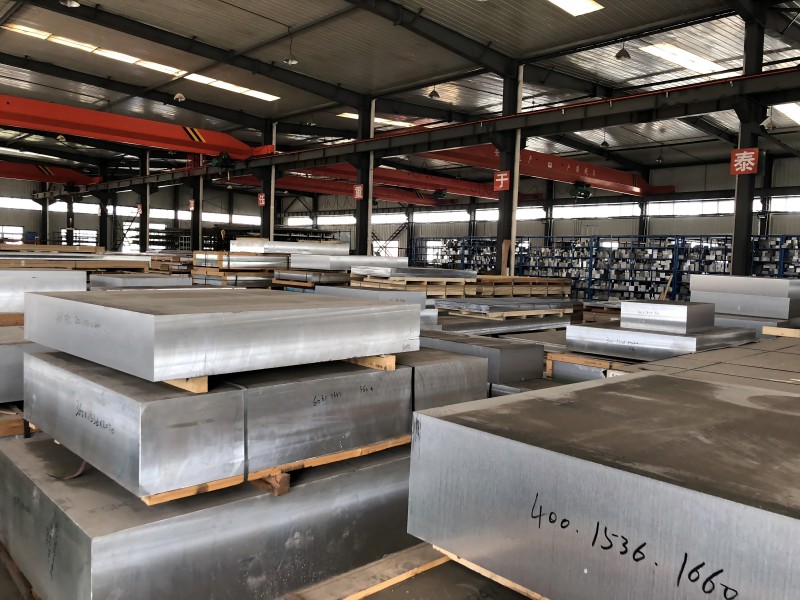
We specialize in delivering exactly what today’s market demands: high-quality aluminum plates, bars, tubes, and custom-CNC-machined components, engineered to your exact specifications. Our product portfolio includes:
· Aluminum Plates & Sheets – ASTM/EN standard alloys (6061, 7075, 5083, etc.), thicknesses from 0.5mm to 200mm, with cut-to-size and edge-machining services.
· Aluminum Bars & Rods – Round, square, hexagonal, and custom profiles, in O, T4, T6, and other tempers, ideal for high-stress structural and automotive applications.
· Aluminum Tubes & Pipes – Seamless and PEW (porous-wall) extruded options, with OD ranging from 6mm to 400mm, suitable for hydraulic systems, heat exchangers, and lightweight frames.
· Precision CNC Machining – 3-, 4-, and 5-axis milling, turning, drilling, tapping, and surface finishing (anodizing, powder coating, polishing) to meet tight tolerances (±0.005mm) and complex geometries.
Our integrated supply chain – from billet sourcing to final inspection – allows us to offer competitive lead times (typically 15–25 days) and flexible order quantities (from sample lots to full container loads). We continuously monitor global market data, adjusting our procurement strategy to secure primary metal at optimal prices, passing those savings on to you.
The WBMS data confirms that the global aluminum market remains in a delicate balance. While May saw a small surplus, the year-to-date deficit signals that demand continues to outstrip supply. As the automotive industry transitions to lightweight electric vehicles, as renewable energy infrastructure expands, and as aerospace production rebounds, consumption of aluminum mill products will only accelerate.
Don’t wait for the deficit to widen further. Contact our export team today for a personalized quotation, technical consultation, or sample order. Let us be your trusted partner in aluminum plates, bars, tubes, and precision-machined components – delivering performance, quality, and peace of mind in every shipment.
Post time: Jul-18-2026