
Citigroup has issued a strong bullish signal in its latest commodity research report, stating that the global aluminum market is facing its strongest upward trend in over 50 years due to a sudden supply shock, and has significantly raised its price forecast.
The analyst of the bank pointed out that the geopolitical tensions in the Middle East have caused an “unprecedented” impact on the global aluminum supply chain, putting over 3 million tons of annual production capacity at risk. Against the backdrop of relatively weak market demand, global explicit inventory already at its lowest level in about 55 years, and industry idle capacity almost depleted, this scale of supply disruption has rapidly pushed the market into a “structural shortage” state.
The report predicts that even considering the suppression of demand by the economic slowdown, there will still be a supply gap of approximately 2.7 million tons in the global aluminum market by 2026. This will sharply deplete inventory in the next 6 to 12 months, bringing it to a historic low. Based on this, Citigroup expects aluminum prices to steadily climb to $4000 per ton in the next three months, and expects the average price to remain at this level in the second half of 2026. In a more optimistic scenario, aluminum prices may even soar to $5350 per ton by 2027.
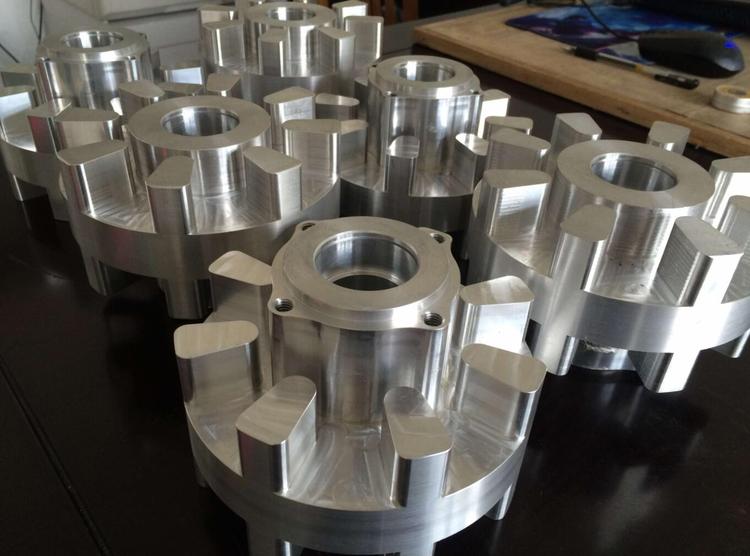
Citigroup warns that this supply crisis could have a “devastating chain reaction” on industries heavily reliant on aluminum, such as construction, packaging, transportation, and renewable energy, pushing up the costs of many end products.
Citigroup’s report undoubtedly dropped a “bombshell” on the market, with its radical views and bold predictions being rare in recent years.
The core of this report is to place a short-term, severe geopolitical supply shock on top of a long-term market structure with low inventory and low capacity elasticity, thereby deriving the conclusion of an “epic” price increase. This logic has its strong side, but it also triggers a deep market examination of its assumptions and premises.
Citigroup directly included the supply risk of 3 million tons in the shortage model. However, the geopolitical situation is constantly changing, and there is great uncertainty about whether production capacity will be temporarily closed or permanently lost. In history, the “supply side story” of commodities often quickly reversed due to the easing of the situation or the emergence of alternative supplies. The market needs clearer evidence to indicate that these production capacities will exit the market in the long term.
The report acknowledges weak demand, but still insists on the judgment of a huge gap. If aluminum prices soar to over $4000 or even $5000 as predicted, it will inevitably have a strong ‘disruptive effect’ on downstream demand. The high cost will force downstream enterprises to seek alternative materials, reduce orders, and even lower production. This negative feedback mechanism is the fundamental force to curb the infinite rise in prices. Citigroup’s’ optimistic scenario ‘may underestimate the speed at which high prices can destroy demand.
Aluminum is a key metal for lightweight and green energy transformation, and its long-term demand prospects were originally bright. But this report reveals a harsh short-term reality: in the face of extreme supply shocks, the long-term narrative of green transformation may give way to a short-term surge in survival costs. For investors betting on ‘green inflation’, this is a complex signal: the elements themselves have become extremely expensive, but downstream green industries may suffer as a result.
In summary, Citigroup’s report is more of an extreme scenario risk projection than a firm prediction, aimed at warning the market that potential upward risks have sharply amplified. It will undoubtedly reshape the market’s price expectation curve, stimulate speculative buying, and force all industry chain participants to re-examine their inventory and hedging strategies. Regardless of whether its predictions can be fully realized, it has successfully sounded a resounding alarm for the global aluminum market: a market accustomed to mild fluctuations must be prepared for the possibility of a severe storm.
Post time: May-20-2026