
The semiconductor industry’s relentless pursuit of smaller, faster, and more powerful chips has pushed manufacturing processes to unprecedented levels of precision, and nowhere is this pressure more acute than in semiconductor cleaning lines. These critical systems are responsible for removing contaminants at the atomic level, as even a single micron-sized particle or trace metal ion can render a 3nm chip useless. For years, the industry relied on a narrow range of materials, assuming that performance required sacrificing either cost, weight, or durability. But precision-machined aluminum and its alloys, including custom aluminum plates, aluminum bars, and aluminum tubes, have emerged as a game-changer, defying expectations and becoming indispensable in high-performance cleaning lines. This is the story of how aluminum, through advanced machining and material science, has risen to become a cornerstone of semiconductor manufacturing excellence.
Semiconductor cleaning lines encompass a range of processes, from wet chemical etching and rinsing to dry plasma cleaning, each with unique material demands. Wet benches, which use aggressive chemical solutions to remove oxides and metallic contaminants, require components that resist corrosion, minimize particle shedding, and support precise fluid flow. Vacuum plasma cleaning systems, on the other hand, demand UHV compatibility, thermal stability, and resistance to plasma induced erosion. For decades, these requirements led manufacturers to favor materials like 316L stainless steel for wet processes and quartz for plasma chambers, choices that came with significant tradeoffs. Stainless steel’s high weight strained automated handling systems, while its poor thermal conductivity caused temperature gradients that reduced cleaning uniformity. Quartz, though chemically inert, is brittle and expensive, leading to high replacement costs in high-volume production environments.
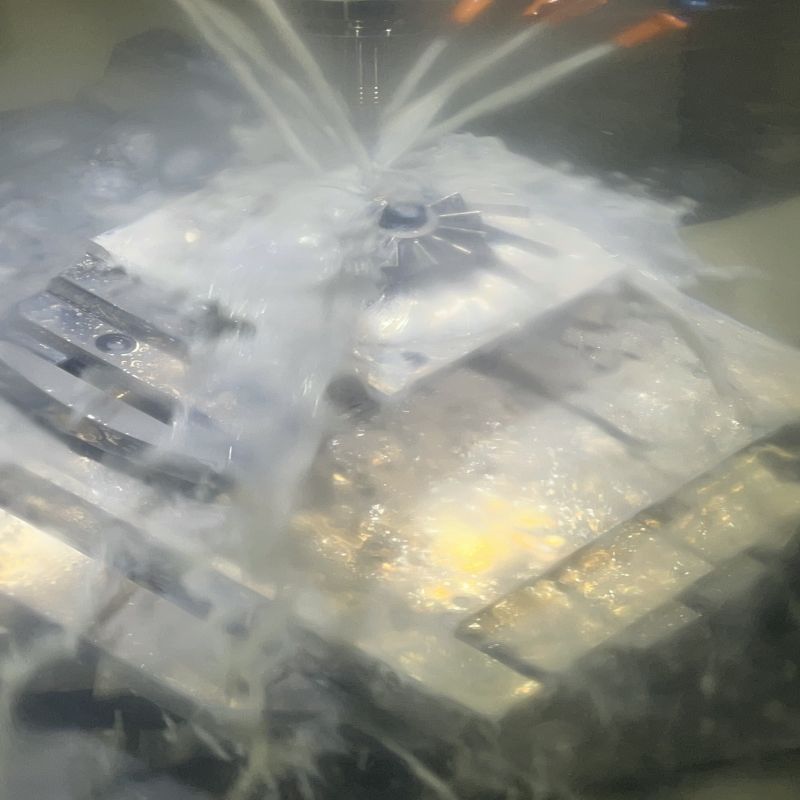
Aluminum’s rise began with the recognition that its inherent properties, lightweight, high thermal conductivity, and excellent machinability could be enhanced through precision engineering to meet semiconductor grade standards, especially when crafted into custom aluminum plates, aluminum bars, and aluminum tubes. The key breakthrough came in advanced machining techniques tailored to aluminum’s unique characteristics, allowing manufacturers to create components that address the specific pain points of cleaning line operations. CNC precision machining, combined with ultra-sonic testing and strict quality control, has enabled aluminum to meet the industry’s most stringent requirements for dimensional accuracy and surface finish, making our aluminum machining services a critical partner for semiconductor equipment makers.
One of the most critical applications of aluminum in cleaning lines is in vacuum plasma chambers, where the material’s near-zero magnetic permeability prevents distortion of RF plasma fields, a critical factor in achieving uniform etching and cleaning. Unlike stainless steel, which can interfere with plasma distribution, aluminum plate chamber walls ensure consistent plasma density across the wafer surface, reducing process variation and improving yield. Precision machined aluminum bar support structures, designed to withstand UHV pressure differentials, provide structural integrity without adding excess weight. Additionally, seamless aluminum tube vacuum feedthroughs, machined to ±0.003mm tolerances, maintain UHV integrity while enabling the passage of process gases and electrical signals. These aluminum components, fabricated from 6061-T6 alloy with seamless CNC machining, achieve UHV performance with helium leak rates below 10⁻⁹ mbar·L/s, meeting the strictest vacuum standards for advanced semiconductor processes. Anodized aluminum surfaces further enhance performance by providing a hard, corrosion resistant barrier that withstands prolonged exposure to reactive plasma species like oxygen and fluorine.
In wet bench systems, aluminum components have proven their worth in fluid delivery manifolds, wafer carriers, and rinse tanks, with aluminum tubes, aluminum plates, and aluminum bars forming the backbone of these high precision systems. Precision-machined aluminum tubes (3mm~200mm diameter) with micro-orifice channels ensure precise chemical flow rates, critical for maintaining consistent etching profiles across 12-inch wafers. Unlike plastic components, which can leach contaminants or degrade over time, aluminum tube manifolds are low-outgassing and compatible with all standard cleaning chemicals, including 50:1 HF and peroxide-based etchants. Aluminum plate wafer carriers, machined with precision slots to hold wafers securely during cleaning, offer a lightweight alternative to stainless steel, reducing robotic arm fatigue and enabling faster cycle times. Their high thermal conductivity ensures uniform temperature distribution during cleaning, minimizing wafer warpage and improving total thickness variation (TTV) to below 5%, a key metric for advanced wafer processing. Additionally, aluminum bar guide rails, integrated into wet bench transport systems, provide smooth, frictionless movement of wafer carriers, reducing particle generation and improving process reliability.
The performance advantages of aluminum are backed by hard data. A recent study by a leading semiconductor equipment manufacturer compared aluminum and stainless steel components in a high-volume wet bench cleaning line, focusing on the impact of aluminum tubes, aluminum plates, and precision machining. The results were striking: aluminum tube manifolds reduced chemical consumption by 12% due to improved flow control, while aluminum plate wafer carriers cut handling time by 18% thanks to their lighter weight. Most importantly, the aluminum-equipped line achieved a 6.5% higher yield rate for 5nm wafers, driven by improved cleaning uniformity and reduced particle contamination. These improvements translated to an estimated annual cost savings of over $2 million for the fab, a compelling ROI for aluminum upgrades.
Another area where aluminum excels is in thermal management, a critical challenge in cleaning lines where exothermic chemical reactions and plasma processes generate heat. Aluminum’s thermal conductivity (≈150 W/m·K) is more than three times that of stainless steel, allowing for efficient heat dissipation and temperature control. Precision-machined aluminum plate cooling plates, integrated into wet bench baths and plasma chambers, maintain temperature stability within ±0.5°C, ensuring consistent cleaning performance even during extended production runs. Aluminum bar heat exchangers, paired with aluminum tube coolant lines, rapidly transfer heat away from critical components, preventing overheating and extending equipment lifespan. This thermal stability is particularly valuable in advanced processes like RCA cleaning, where precise temperature control is essential for removing organic residues and metallic contaminants without damaging the wafer surface.
Aluminum’s machinability is another key advantage, enabling the production of complex, custom components that optimize cleaning line performance, a capability that sets our aluminum machining services apart. Unlike stainless steel, which requires specialized tooling and longer machining times, aluminum can be precision machined into intricate shapes with tight tolerances (±0.005mm) at a fraction of the cost. This flexibility allows equipment manufacturers to design cleaning lines that are more compact, efficient, and tailored to specific process requirements. For example, precision extruded aluminum bar profiles are used in cleaning line frames and enclosures, providing structural rigidity while reducing overall equipment weight by up to 30%. This not only lowers installation costs but also makes it easier to reconfigure lines for new processesa, critical capability in an industry where technology evolves rapidly. Additionally, aluminum plate baffles, machined with custom hole patterns, optimize gas flow in plasma chambers, further improving cleaning uniformity.
The sustainability benefits of aluminum further strengthen its case in semiconductor manufacturing, where environmental responsibility is becoming an increasingly important factor. Aluminum is 100% recyclable without loss of quality, reducing the carbon footprint of aluminum plate, aluminum bar, and aluminum tube components. Its lower energy requirements for machining and transportation also contribute to greener operations, aligning with the industry’s goal of reducing environmental impact. For fabs seeking to meet sustainability targets while maintaining performance, aluminum offers a clear advantage over traditional materials.
As semiconductor processes advance to 2nm and beyond, the demands on cleaning lines will only increase and aluminum is well positioned to meet these challenges. Ongoing innovations in aluminum alloy development, such as the introduction of high purity 5083 and 7075 alloys, are enhancing the material’s strength and corrosion resistance, expanding its applications in even the most demanding cleaning processes. Advanced machining techniques, including laser machining and electrical discharge machining (EDM), are further pushing the boundaries of what’s possible with aluminum, enabling components with even tighter tolerances and more complex geometries.
From underrated alternative to indispensable component, aluminum’s rise in semiconductor cleaning lines is a testament to the power of precision engineering and material science. By leveraging aluminum’s inherent strengths and enhancing them through advanced machining of aluminum plates, aluminum bars, and aluminum tubes, the semiconductor industry has found a material that delivers superior performance, lower costs, and greater sustainability, all critical factors in a highly competitive market. As more fabs recognize the benefits of aluminum, its role in cleaning lines will continue to grow, driving innovation and enabling the next generation of semiconductor technology. The future of semiconductor cleaning is lightweight, precise, and efficient, and it’s built on aluminum.
Post time: Jan-27-2026