
Semiconductor vacuum chambers act as core sealed carriers for etching, PVD deposition and ion implantation procedures, improper alloy selection triggers high outgassing, structural deflection or vacuum leakage, directly lowering wafer production yield. Both 5052 H32 and 5083 H321 belong to non heat-treatable Al-Mg wrought aluminum grades, yet divergent magnesium and manganese compositions split their applicable semiconductor cavity scenarios fundamentally.
Chemistry lays the performance boundary. 5052 contains 2.2~2.8 wt% Mg with marginal Mn element below 0.1%, while 5083 upgrades Mg content to 4.0~4.9% plus 0.4~1.0% manganese for grain refinement and solid-solution strengthening. This compositional gap delivers 38~42% higher ultimate tensile strength on 5083 (310~320MPa vs 215~230MPa of 5052), forming their first application watershed for semiconductor housing design.
5052 dominates compact, complex-profile transfer chambers and small load-lock enclosures in mid-end semiconductor equipment. Its superior cold formability and ductility simplify multi-axis CNC deep pocket machining, intricate cooling channel milling and thin flange integrated forming without springback deformation. The alloy boasts controlled low outgassing rate below 10⁻⁸ Torr·L/(s·cm²) after precision electropolishing, matching ultra high vacuum (UHV) basic sealing standards for batch type small volume process cavities. Cost efficiency is another highlight: raw material expenditure of 5052 cuts 12~15% versus 5083, ideal for OEM mass produced standard semiconductor peripheral casings and auxiliary sensor mounting cavities. Our factory realizes high-volume blanking and finish machining of 5052 sheets, solid bars and seamless aluminum tubes with ±0.003mm dimensional tolerance via five-axis CNC machining centers.
Shift to heavy duty main process chambers, and 5083 becomes irreplaceable. Its elevated mechanical rigidity resists cyclic vacuum differential pressure deformation and repeated thermal cycling creep under high-low temperature alternating working conditions inside deposition cavities. H321 tempered 5083 features optimized stress corrosion cracking (SCC) resistance against halogen-based corrosive process gas, critical for advanced etch equipment exposed to fluorine containing plasma atmosphere. Superior cryogenic toughness further fits low temperature semiconductor process chambers running at sub zero operational environment, avoiding brittle crack failure under thermal shock.
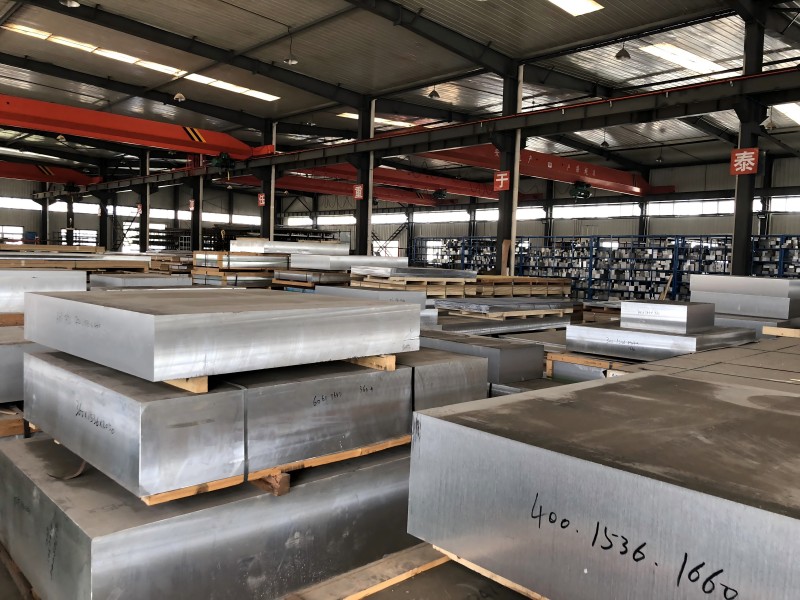
Our in-house production strength backs customized machining for both alloys. Equipped with Class 10,000 clean workshop, helium mass spectrometer leak detector and automatic ultrasonic cleaning line, we fulfill one-stop service from aluminum slab cutting, precision CNC machining, inert-gas TIG welding to ultra fine surface finishing for semiconductor cavity components. Monthly output hits over 35 tons of finished 5052/5083 machined parts, covering custom aluminum plate, solid aluminum bar and hollow aluminum tube raw stock supply alongside finished chamber fabrication.
For clients confused over grade picking: choose 5052 for lightweight, cost sensitive complex small cavities. Opt for 5083 for large size, high load, corrosive environment core process chambers. Our engineering team provides free FEA structural simulation and material selection consultation to optimize your semiconductor enclosure procurement budget and long term equipment stability.
Post time: Jun-12-2026